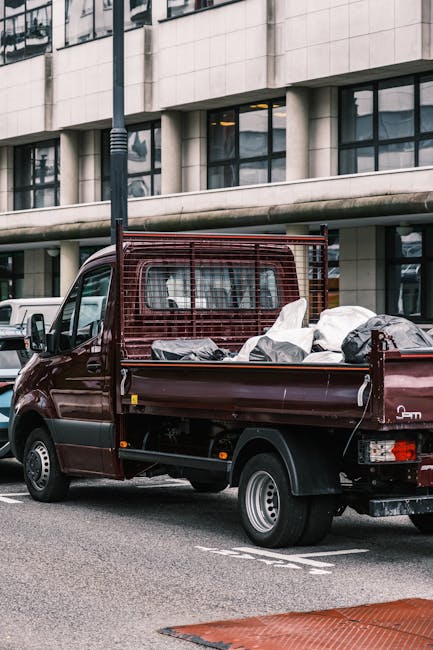
Emergency rubbish clearance Bayswater fast response for flats
Posted on 11/10/2026
When rubbish starts building up in a flat, it can go from annoying to urgent very quickly. A broken wardrobe in the hallway, a pile of bagged waste after a tenant move-out, fly-tipped items near the entrance, or a burst water mess that has left damaged furniture piled up - suddenly you need Emergency rubbish clearance Bayswater fast response for flats, not a next-week appointment. And if you live in a block, the pressure is a bit different. Shared entrances, lift access, neighbours, managing agents, parking restrictions. It all adds up.
This guide explains how fast-response flat clearance works in Bayswater, what to expect on the day, and how to choose a service that actually solves the problem rather than creating a new one. You will also find practical steps, compliance pointers, common mistakes, and a checklist you can use straight away. Let's face it, when rubbish is blocking a hallway, you do not want theory - you want things gone, safely and quickly.
Quick takeaway: In flats, emergency rubbish clearance is about more than speed. Good access planning, correct waste handling, clear communication, and a tidy finish matter just as much as the collection itself.

Why Emergency rubbish clearance Bayswater fast response for flats Matters
Flat clearances are rarely just about rubbish. More often, they are about access, safety, timing, and keeping communal areas usable. In Bayswater, that matters even more because many buildings have narrow stairwells, shared corridors, residents coming and going, and very little spare space. A few bulky items left in the wrong place can block a fire route, annoy neighbours, or create an immediate trip hazard.
Fast response is valuable because delays make the problem worse. Food waste can smell. Soft furnishings can start to absorb damp. Broken items become harder to move. And if there is a complaint from the managing agent or freeholder, you may be asked to clear the area quickly anyway. Why let a temporary issue become a bigger one?
There is also the practical reality of London living: parking is limited, lift access may be timed, and you may only have a short window before residents return home. A team experienced in emergency rubbish clearance understands that the job is not just lifting bags into a vehicle. It is about working around real building constraints without turning your block upside down. You want a tidy, calm process. Not a parade of problems.
For homeowners, landlords, and tenants alike, a rapid clearance can prevent complaints, protect the property, and restore normal life faster. That is especially useful after tenant changes, after a minor emergency, or when clutter has got out of hand and needs dealing with now rather than later.
How Emergency rubbish clearance Bayswater fast response for flats Works
A proper emergency rubbish clearance usually starts with a short assessment over the phone or by message. The aim is to understand what needs removing, how much there is, whether there are stairs or lift restrictions, and whether anything needs special handling. In flats, those details matter a lot. A small pile of rubbish in a basement store room is one thing. A third-floor flat with no lift and a tight stairwell is another.
Once the job is assessed, a collection window is agreed. Fast response normally means same-day or next-available attendance, subject to availability and access. The team then arrives with the right labour, transport, and equipment to move items safely. That might include sack trucks, protective gloves, trolleys, and suitable bags or containers for loose waste.
On arrival, good crews will usually check the route first. They will look at the lift size, the width of hallways, the nearest parking point, and any building rules about loading or noisy work. Then they clear the items, sort what can be separated, and load the waste into the vehicle. If the job involves mixed rubbish, old furniture, or appliance disposal, the team may separate materials for recycling where practical. Simple on paper. Slightly less simple in a fourth-floor flat with a sticky lift door and a neighbour trying to squeeze past with shopping.
After the removal, the area should be left clear and tidy. In emergency jobs, that final sweep-up is often what people remember most. You do not want dust, screws, broken bits of packaging, or a trail left behind. A clean finish is part of the job, not a bonus.
Key Benefits and Practical Advantages
There are several reasons why residents and property managers choose emergency rubbish clearance rather than waiting for a routine collection.
- Speed: The main benefit is obvious. Waste is removed quickly before it becomes a bigger nuisance or hazard.
- Less disruption: A good team works around flat access, neighbours, and building rules so the job causes minimal interruption.
- Safer shared spaces: Hallways, lobbies, and stairwells stay clearer, which is especially important in multi-occupancy buildings.
- Better presentation: This matters for rental properties, short lets, and blocks where first impressions count.
- Flexible handling: Emergency jobs often include mixed waste, awkward furniture, or damaged items that regular bin services will not take.
- Reduced stress: When rubbish is piling up, having someone deal with it in one visit is a real relief. Truth be told, that peace of mind is worth a lot.
There is another benefit that is easy to overlook: rapid clearance helps you make decisions sooner. Once the space is empty, you can inspect for damage, check what needs repairing, and decide whether anything should be kept, recycled, or replaced. In a flat, space is precious. You notice the difference immediately.
Who This Is For and When It Makes Sense
This service is useful for a wide range of people, and the need often shows up at the least convenient time. The usual situations include:
- Tenants who need to clear items before a move-out inspection or after a sudden change of plan.
- Landlords and letting agents dealing with abandoned belongings, end-of-tenancy waste, or a flat that needs resetting fast.
- Managing agents handling communal rubbish, fly-tipped waste, or items left in shared areas.
- Homeowners who are dealing with a burst pipe, fire damage, flood-damaged furniture, or a surprise clean-up after visitors, trades, or renovation work.
- Builders and decorators who need leftover waste removed before handover.
- Older residents or busy households who simply cannot keep storing bulky items while waiting for a standard service.
It makes sense any time the waste is causing practical problems, not just visual ones. If items are blocking access, attracting complaints, making the flat hard to use, or creating a hygiene issue, fast clearance is usually the sensible next step. Sometimes the trigger is a single broken sofa. Sometimes it is a corridor that has slowly become a dumping ground. Either way, the principle is the same: remove the obstacle and restore order.
One common scenario in Bayswater is a flat refurbishment where old furniture, packaging, and builders' offcuts all need clearing on the same day. That is exactly the sort of job where a general rubbish collection can feel too slow, but a quick-response service fits better.
Step-by-Step Guidance
If you want the smoothest possible experience, it helps to approach emergency clearance in a simple sequence. No drama. Just a few sensible steps.
- Identify the waste clearly. Note what needs removing, roughly how much there is, and whether any items are especially heavy, sharp, wet, or fragile.
- Check access. Is there a lift? Are there stairs? Can a vehicle park close by? Are there building restrictions or permit issues?
- Separate anything reusable or personal. In a flat, things can blur together quickly. Keep documents, keys, electronics, medication, and valuables away from the clearance pile.
- Ask for a realistic response window. Fast response is only useful if the timing is honest. A clear arrival estimate helps you plan around neighbours and building access.
- Confirm what the service can take. Standard household rubbish, furniture, white goods, and renovation waste are often handled, but hazardous materials may need a different process.
- Prepare the route. If possible, move small items away from doorways and make sure the path from flat to vehicle is as open as you can make it.
- Supervise the collection if needed. This is particularly useful in shared buildings where there are questions about which items belong to which flat or store room.
- Check the finish. Make sure the space is clear, the obvious debris is removed, and no items have been left behind by mistake.
A useful rule of thumb: the better the information you give at the start, the faster the clearance tends to go. Not groundbreaking, but it works. And in emergency work, saving ten minutes at the beginning can save half an hour later.
Expert Tips for Better Results
Small decisions make a big difference in flat clearances. These are the details people often miss until they have been through the process once or twice.
- Take quick photos before booking. A few clear pictures of the waste, the stairwell, the lift, and the building entrance help the team prepare properly.
- Measure awkward items. Oversized furniture, mattresses, and appliances can be harder to manoeuvre than they look in a narrow corridor.
- Tell neighbours if access may be tight. A short heads-up can prevent a lot of awkwardness in shared hallways.
- Keep a short list of what must not go. It sounds simple, but when people are clearing in a hurry, mistakes happen.
- Ask about recycling and sorting. If you have mixed waste, it helps to know whether the team will separate recyclable items where possible.
- Choose a company used to flats, not just houses. Flats bring different challenges: corridors, lifts, loading points, and resident traffic.
In our experience, the best outcomes come from calm, clear communication. You do not need to write an essay. Just give the essentials: what, where, how much, and how urgent. Then let the crew do the heavy lifting - literally.
If the job includes items from a refurbishment, it can also help to pair rubbish removal with a broader clearance plan. For example, a flat that is being redone may need waste, old furniture, and bulky fixtures handled in sequence rather than all at once. That is often easier than trying to squeeze everything into a rushed final day.

Common Mistakes to Avoid
Emergency clearances go wrong most often because of poor preparation, unclear expectations, or trying to force the wrong type of waste into the wrong service. A few common mistakes stand out.
- Leaving the booking too vague. "Just a few bags" can mean very different things to different people. Be specific.
- Forgetting access details. A fifth-floor flat with no lift is not the same as a ground-floor studio. The crew needs to know.
- Mixing hazardous items with general rubbish. Some items need special handling and should not be hidden in a general pile.
- Blocking communal areas while waiting. If waste is already causing a hazard, try not to spread it further while sorting things out.
- Not checking building rules. Some blocks have loading bays, restricted hours, or requirements for visitor access. That can delay the job if nobody mentions it.
- Assuming every provider handles the same materials. White goods, plasterboard, and mixed builders' waste may not be treated the same way as household rubbish.
Another mistake is focusing only on price. Cheap can be tempting, especially if the problem has arrived out of the blue. But a service that is too rushed, unclear, or under-equipped can cost more in time and hassle. A poor clearance in a flat is particularly irritating because the mess tends to spread to shared spaces. And then everyone notices.
Tools, Resources and Recommendations
You do not need specialist tools to arrange an emergency clearance, but a few simple items and habits make the process smoother.
- Phone camera: Use it to photograph the waste and access route so you can explain the job clearly.
- Short notes list: Write down room locations, access codes, parking instructions, and any items that should stay.
- Strong bags or boxes: Helpful if you are tidying loose items before the team arrives.
- Gloves and sensible footwear: Useful if you are sorting through broken or dusty material before clearance.
- Building contact details: Managing agent, concierge, porter, or caretaker details can save time when access is tight.
For property owners and managers, it is also sensible to keep a few service pages bookmarked for different waste types. For example, if a flat clearance includes broken furniture, furniture disposal in Bayswater may be relevant, while renovation leftovers might fit better with builders waste disposal in Bayswater. If you are dealing with a larger move-out or a full reset of the property, house clearance in Bayswater can be a useful related option too, especially where the contents are more varied than standard rubbish.
It is also worth checking whether the provider explains pricing clearly and handles waste responsibly. A transparent pricing page and clear waste handling information are good signs, not fancy extras. They tell you the company has thought through the work rather than just the sale.
Law, Compliance, Standards, or Best Practice
For rubbish clearance in the UK, compliance is not just a box-ticking exercise. It is part of protecting residents, buildings, and the wider environment. You do not need to be an expert to ask sensible questions, though.
A reputable waste carrier should be properly licensed and should handle waste in line with accepted UK waste-management practice. That means waste should be transported responsibly, not dumped somewhere dubious because it was quicker or cheaper. If you are arranging clearance for a flat, especially as a landlord or managing agent, it is wise to work with a provider that is open about licensing, safety, and where waste goes.
For shared buildings, best practice also includes protecting communal access routes, avoiding fire exits, and keeping noise and disruption down where possible. If the job involves heavy lifting in stairwells, sensible manual-handling practice matters too. Nobody wants a damaged wall, a scratched bannister, or an avoidable injury. That kind of thing has a way of becoming everyone's problem.
Useful things to ask include:
- Are you licensed to carry waste?
- How do you handle recyclable material?
- What happens if access is awkward or restricted?
- Do you have insurance and safety procedures for flat clearances?
- Can you separate mixed waste where appropriate?
If a provider cannot answer basic compliance questions plainly, that is usually a sign to keep looking. Simple, direct, trustworthy answers are what you want. Not waffle.
Options, Methods, or Comparison Table
Depending on the urgency and the type of waste, there are a few ways to deal with flat rubbish. Here is a straightforward comparison.
| Option | Best for | Typical strengths | Limitations |
|---|---|---|---|
| Emergency rubbish clearance | Urgent removals, blocked access, same-day needs | Fast, convenient, suited to awkward access and mixed waste | Usually costs more than a routine pickup |
| Standard rubbish collection | Non-urgent waste with time to plan ahead | Good for lower-pressure jobs | May not suit heavy, bulky, or immediate problems |
| Self-removal | Small loads and people with transport and time | Full control over timing | Laborious, risky for bulky items, awkward in flats |
| Site skip or container | Longer projects with lots of waste | Useful for ongoing work | May need permits, space, and planning; not ideal for tight flats |
For most flat emergencies, the specialist clearance option is the most practical. Self-removal looks cheaper until you are dragging a broken wardrobe down two flights of stairs with nowhere to park. Nobody enjoys that. Nobody.
Case Study or Real-World Example
A typical Bayswater scenario goes like this. A resident in a third-floor flat had a last-minute tenancy change and needed several bags of general rubbish, an old mattress, a damaged bedside table, and some broken shelving removed before the next morning. The building had a narrow entrance, a small lift, and limited visitor parking. Not a disaster, but not exactly easy either.
The first step was to identify what needed taking and what stayed. The resident sent a few photos and noted the lift dimensions, which corridor was easiest to use, and the best parking point outside the building. That meant the crew arrived ready with the right equipment and no wasted time. The mattress was removed first, followed by the loose waste, then the small furniture pieces. The hallway was checked on the way out, and the area was left clear.
What made the difference was not brute force. It was preparation. The job was finished quickly because the access details were known in advance and the items were grouped sensibly. The resident could hand back the flat on time, the managing agent had no complaint about communal mess, and the whole thing stayed relatively calm. That is the sort of win people remember afterwards - not flashy, just relief.
Practical Checklist
Before you book or before the team arrives, run through this quick checklist. It saves time and prevents awkward surprises.
- Have I listed all items that need removing?
- Do I know whether any items are hazardous, sharp, wet, or fragile?
- Have I confirmed the flat floor level and whether there is a lift?
- Is parking or loading access likely to be an issue?
- Have I checked building rules or access restrictions?
- Have I removed valuables, documents, and personal items?
- Do I know what time window works best for the collection?
- Have I asked whether the provider can handle the specific waste type?
- Do I need recycling, furniture removal, or appliance disposal as part of the job?
- Have I taken photos in case I need to explain the job quickly?
If you can tick most of those off, you are in a good position. The rest is usually straightforward. And if one or two things are still unclear, that is fine - just ask before the work starts.
Get a free quote today and see how much you can save.
Conclusion
Emergency rubbish clearance in Bayswater for flats is all about speed, care, and sensible planning. The best service does more than remove items. It helps you deal with access issues, shared spaces, awkward furniture, and the pressure that comes with needing a quick solution. Whether you are a tenant, landlord, managing agent, or homeowner, the aim is the same: clear the mess without creating new problems.
If you prepare the basics, choose a provider experienced with flats, and stay clear about what needs removing, the whole process becomes much easier. A good clearance can feel like a reset button. One moment the place is cramped and stressful; the next, it breathes again. Simple, really - but a very welcome kind of simple.
For a broader look at available services and related waste support in the area, you may also find the services overview useful, along with information on waste clearance in Bayswater and rubbish collection in Bayswater. If you prefer to understand the company background first, the about us page is there too.
Sometimes the quickest fix is also the calmest one. That is worth remembering.